
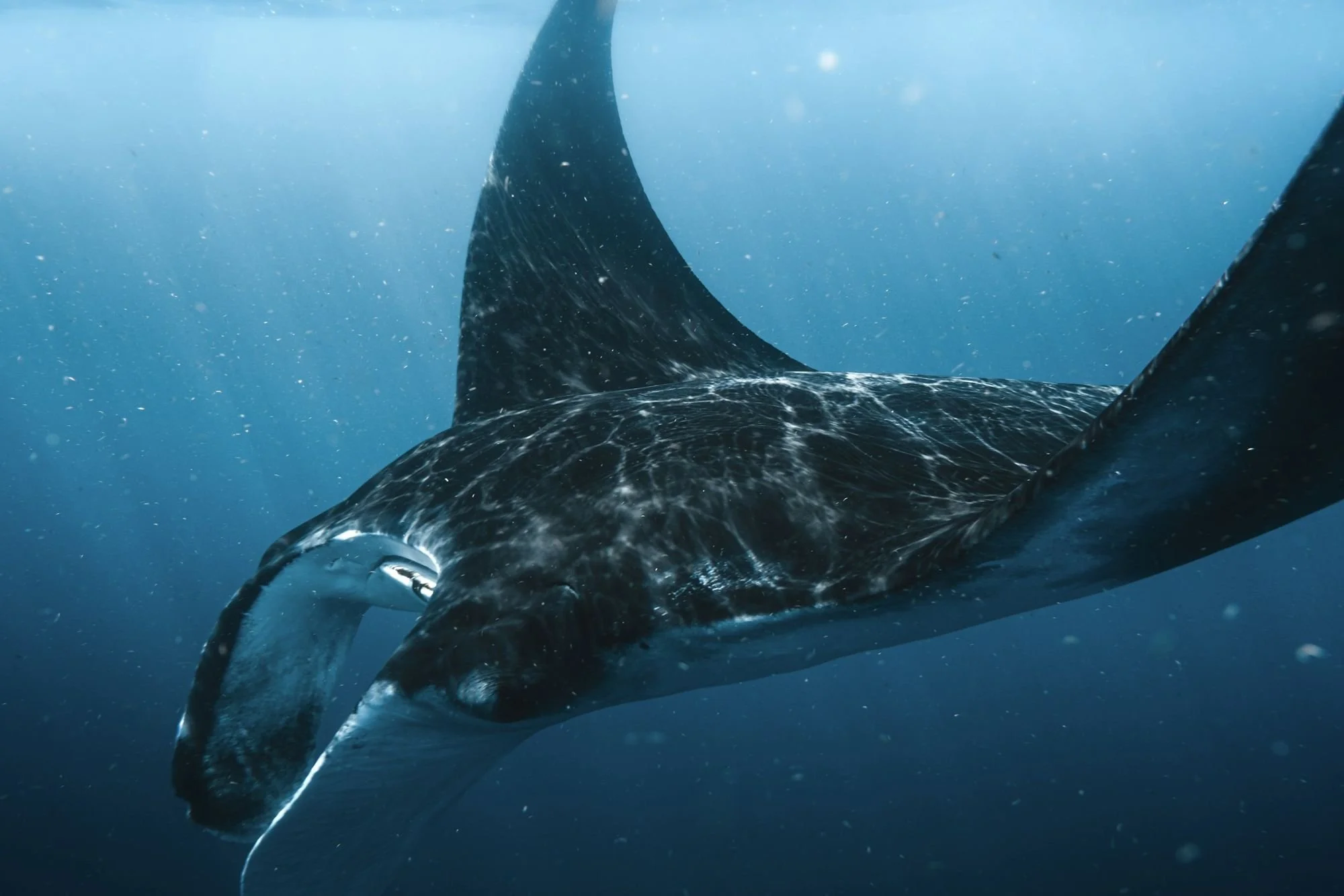
Manta rays are found across the Maldives all year, but the encounters worth travelling for follow the plankton. From May to November, the southwest monsoon pushes nutrient-rich water through the atolls and mantas gather to feed and be cleaned. In Huvadhu Atoll, in the far south, you get those same gatherings with one difference: you will often have the site to yourself.
Most manta stories from the Maldives come from the famous northern sites, where a single feeding event can draw dozens of snorkellers from nearby resorts. The deep south plays the same show to an empty theatre. Here is how manta encounters in Huvadhu work, when to come, and what to expect in the water.
Why mantas gather in Huvadhu Atoll
Huvadhu is one of the largest natural atolls in the world, ringed by channels that flush oceanic water in and out with every tide. That movement does two things mantas love. It concentrates plankton along current lines and channel mouths, creating feeding lanes. And it supports healthy reefs where cleaner wrasse hold territory, which means cleaning stations: coral heads where mantas queue, hover, and circle while small fish pick them clean.
Cleaning stations are the most reliable manta encounter in the atoll. A feeding aggregation depends on that day's plankton; a cleaning station is a fixed address the animals visit again and again. Local guides know which stations are active in which season, and the etiquette is simple: settle low to the side, keep still, and let the mantas control the distance. They are curious animals. A calm diver often gets a closer pass than an eager one.
When to see them
May to November is the strong season. Southwest monsoon water carries the plankton, and mantas respond within days. Feeding events happen at the surface, in the channels, and along the atoll's western rim. This is when multiple-manta dives become normal rather than lucky.
December to April still produces sightings, especially at cleaning stations on the eastern side, but they are less predictable. If mantas are the animal your trip depends on, aim for June to October. For the full seasonal picture across diving, snorkelling and surf, see our month-by-month guide.
Snorkelling with mantas vs diving with them
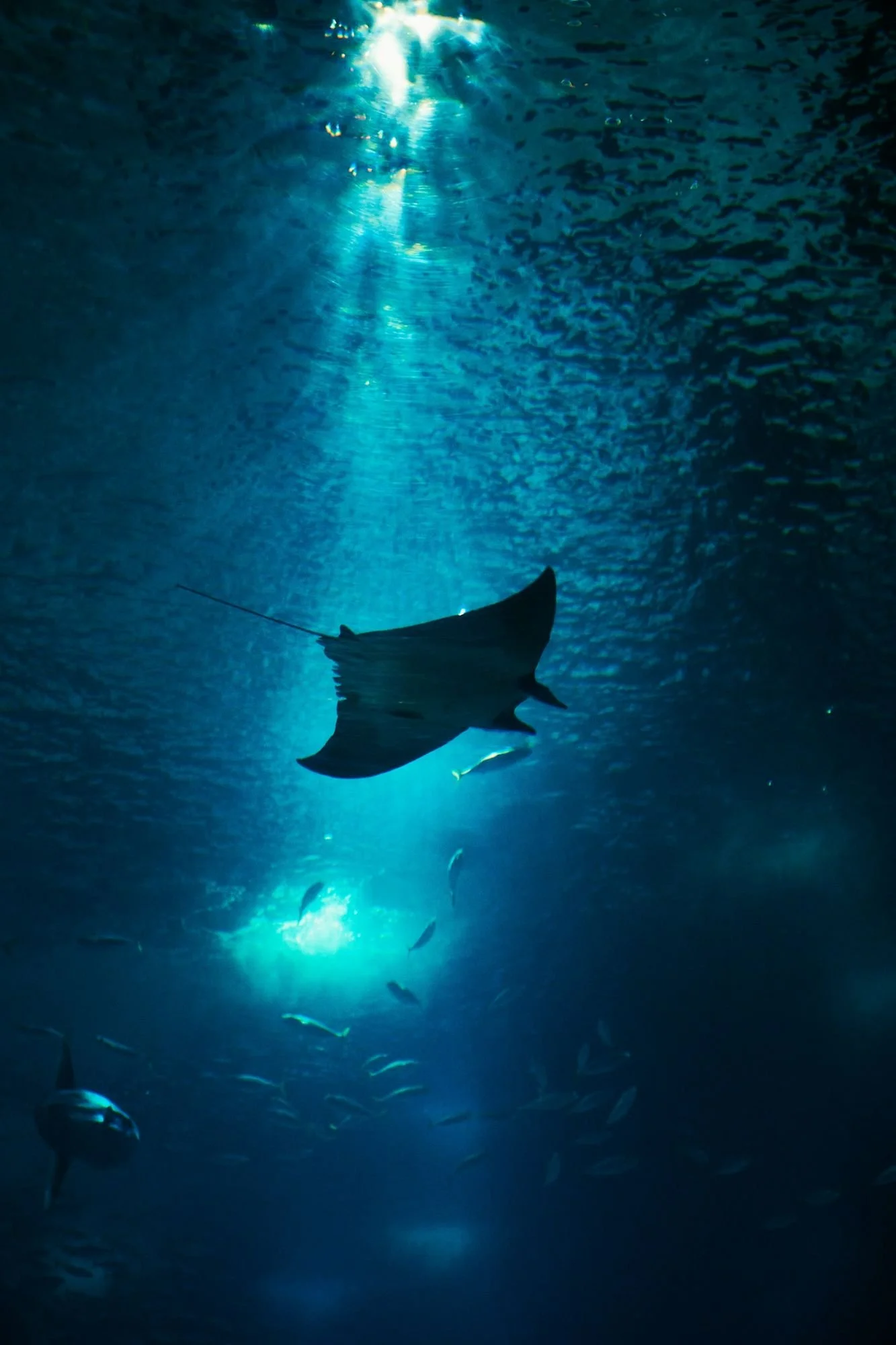
You do not need a tank. Feeding mantas often work the top few metres of water, and a quiet snorkeller on the surface can watch barrel-rolling giants pass underneath for as long as the plankton holds. Divers get the cleaning stations, where the encounter is slower and closer to the reef. The ideal Huvadhu itinerary includes both, and our snorkelling guide covers the reef side of the atoll in detail.
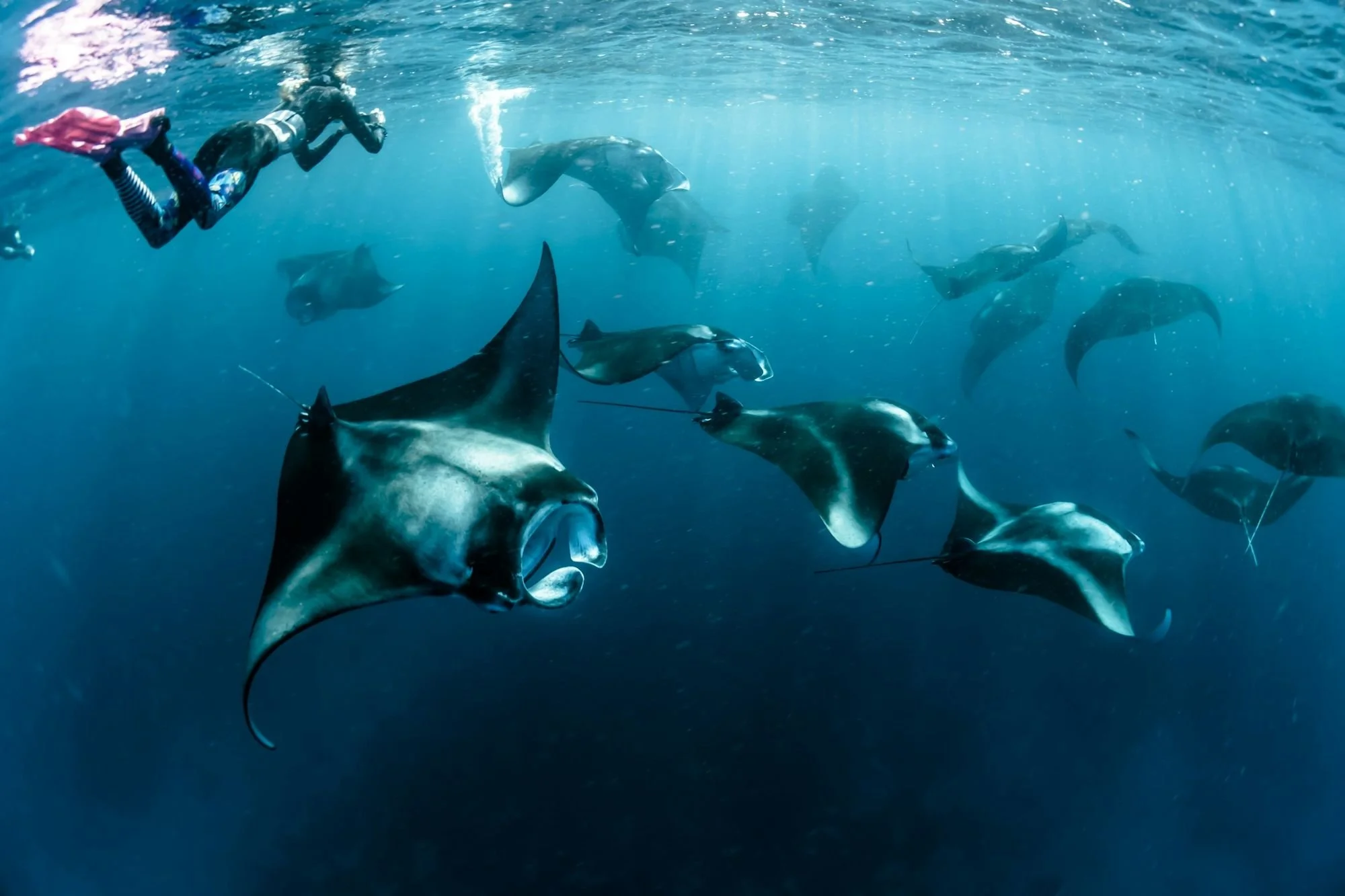
A note on conduct, because it matters more with mantas than almost any other animal: never touch, never chase, and never block a manta's path or hover over a cleaning station. Mantas abandon stations that get crowded or harassed. The deep south's advantage is precisely that its animals are undisturbed; every visitor inherits the job of keeping it that way.
Not stingrays, and not dangerous
Mantas are related to stingrays but carry no barb and no sting. They cannot hurt you, they do not bite, and they eat only plankton, filtered through wide-open mouths as they swim. An adult reef manta in the Maldives commonly spans three to four metres wing tip to wing tip, and the far larger oceanic manta passes through the deep south's outer waters too. Being close to an animal that size, and completely safe, is a large part of why people cross the planet for this.
Frequently asked questions
Where is the best place to see manta rays in the Maldives? The well-known northern aggregation sites are the most famous, but the southern atolls, including Huvadhu, host mantas through the same seasons with a fraction of the visitors. Cleaning stations in Huvadhu's channels offer reliable encounters, especially from May to November.
When is manta ray season in the Maldives? Mantas are present year-round, but the peak is the southwest monsoon, roughly May to November, when plankton concentrates and feeding aggregations form. December to April sightings continue at cleaning stations, less predictably.
Are manta rays dangerous? No. Mantas have no sting, no barb and no teeth capable of harming a person. They are filter feeders that eat plankton. The only rule is to give them space so they stay relaxed around people.
Can you snorkel with manta rays or do you need to dive? Both work. Feeding mantas come to the surface, where snorkellers get long encounters. Divers see them at cleaning stations near the reef. Huvadhu operators run both, depending on season and conditions.
How big do manta rays get? Reef mantas in the Maldives typically reach three to four metres across. Oceanic mantas, seen in deeper water, can exceed six metres.
Huvadhu Atoll map: every dive site, surf break, resort and local island in one place.