
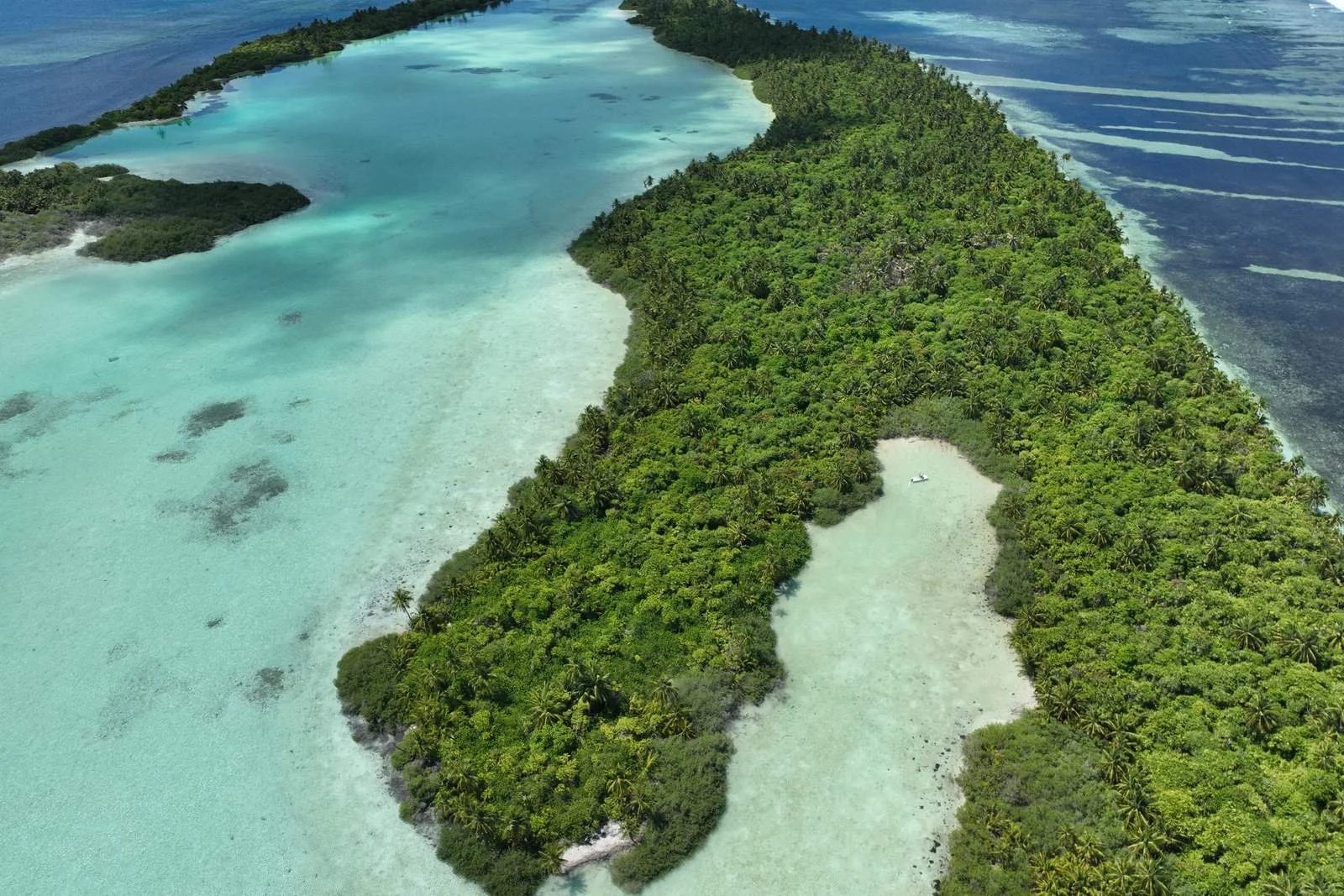
If you have been researching the southern Maldives, you have probably met three names that seem to describe the same place: Gaafu Alifu, Gaafu Dhaalu, and Huvadhu. Here is the answer. Huvadhu is the atoll, one of the largest natural atolls on earth. Gaafu Alifu is its northern administrative half, Gaafu Dhaalu its southern half. Two names on the map, one enormous ring of reef, lagoon and islands in the water.
Most Maldives travel writing stops at the resort jetty. This guide goes the other way: into the atoll's local islands, where guesthouse travel has quietly opened one of the country's most traditional regions to visitors.
One atoll, two names
The Maldives names its administrative atolls by letters of the Thaana alphabet, which is how a single natural atoll came to be split on paper into Gaafu Alifu (GA) in the north and Gaafu Dhaalu (GDh) in the south. Locals, sailors and divers still call the whole ring Huvadhu. When you search flights or ferries you will meet the administrative names; when you are on the water, the atoll is simply one place, over 3,200 square kilometres of lagoon ringed by more uninhabited islands than anywhere else in the Maldives. The geography is mapped on our Location page.
Islands worth knowing
Thinadhoo (Gaafu Dhaalu) is the atoll's largest town and the deep south's unofficial capital: harbour, cafes, shops, and the atoll's main sense of bustle. It is a real Maldivian town rather than a postcard, which is exactly its value.
Viligili (Gaafu Alifu), the northern capital, sits beside the channel that gives the atoll's most famous dive its name, Villingili Kandu. Fishing remains the island's rhythm.
Gadhdhoo (Gaafu Dhaalu) is known across the Maldives for thundu kunaa, the finely woven reed mats that are among the country's most celebrated crafts. Watching the weaving is one of the atoll's genuine cultural encounters; the wider traditions of the region are covered on our Culture page.
Guesthouse islands across both halves, including Dhaandhoo, Gemanafushi and their neighbours, host the small locally owned stays that make independent travel here possible. Standards are simple and hospitality is personal; you will eat what the boats brought in that morning.
Between the inhabited islands lie dozens of uninhabited ones, sandbanks and picnic islets, which is where island-hopping days, and the atoll's emptiness, become real.
What island life is actually like
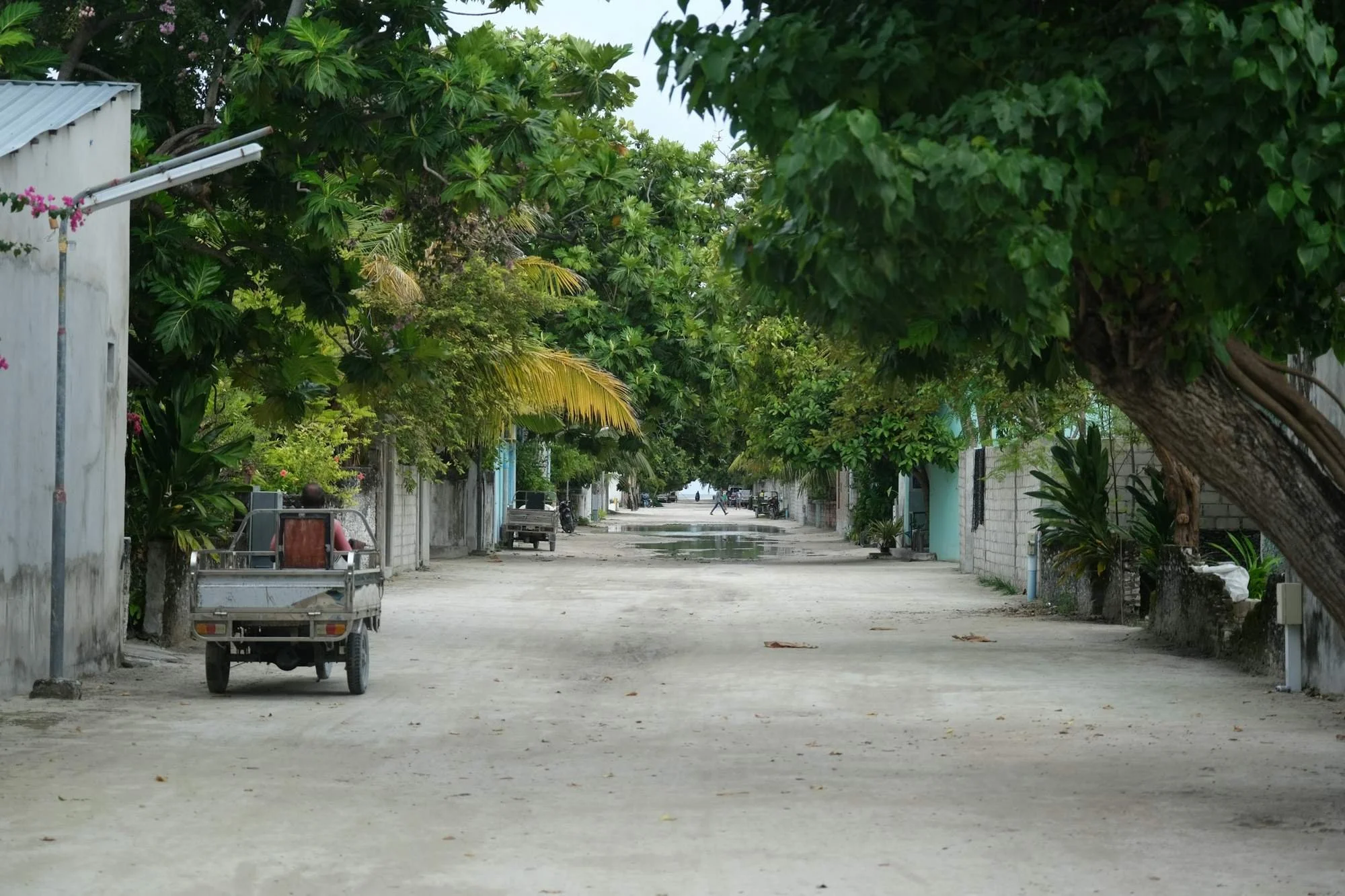
Local islands are Muslim communities, and visiting well means dressing modestly in the village, swimming at designated bikini beaches, and letting Friday move at its own pace. Alcohol is not available on local islands. In exchange you get the Maldives that resorts by design cannot show: school runs by bicycle, fish markets at dusk, joali seats under breadfruit trees, and reef edges a few fin-kicks from the jetty.
The diving and snorkelling from local islands is the same deep south ocean described in our diving and snorkelling guides, and it prices at guesthouse rates, a comparison broken down in our cost guide.
Getting there and around
Two regional airports serve the atoll: Kooddoo in Gaafu Alifu and Kaadedhdhoo in Gaafu Dhaalu, both reached by domestic flight from Malé in around an hour. From either, local ferries and guesthouse speedboats connect the islands. Full connections are in Getting Here. The atoll rewards slow itineraries: two or three islands in a week beats six.
When to come: the dry season, December to April, is easiest for ferries and island-hopping; the southwest monsoon brings the feeding season underwater. The trade-offs month by month are in our seasonal guide.
Frequently asked questions
Is Gaafu Alifu the same as Huvadhu Atoll? Gaafu Alifu is the northern administrative half of Huvadhu Atoll; Gaafu Dhaalu is the southern half. Together the two districts make up the single natural atoll called Huvadhu.
Can tourists stay on local islands in the Maldives? Yes. Since guesthouse tourism was permitted on inhabited islands, travellers can stay in locally owned guesthouses across Huvadhu, at a fraction of resort prices, while respecting local customs.
Which islands should I visit in Huvadhu Atoll? Thinadhoo for the atoll's main town, Viligili beside the famous channel, Gadhdhoo for traditional mat weaving, and a guesthouse island such as Dhaandhoo or Gemanafushi as a base for diving and island-hopping.
How do you get to Gaafu Alifu or Gaafu Dhaalu? Domestic flights from Malé serve Kooddoo airport in the north of the atoll and Kaadedhdhoo in the south, each about an hour in the air, with boats onward to the islands.
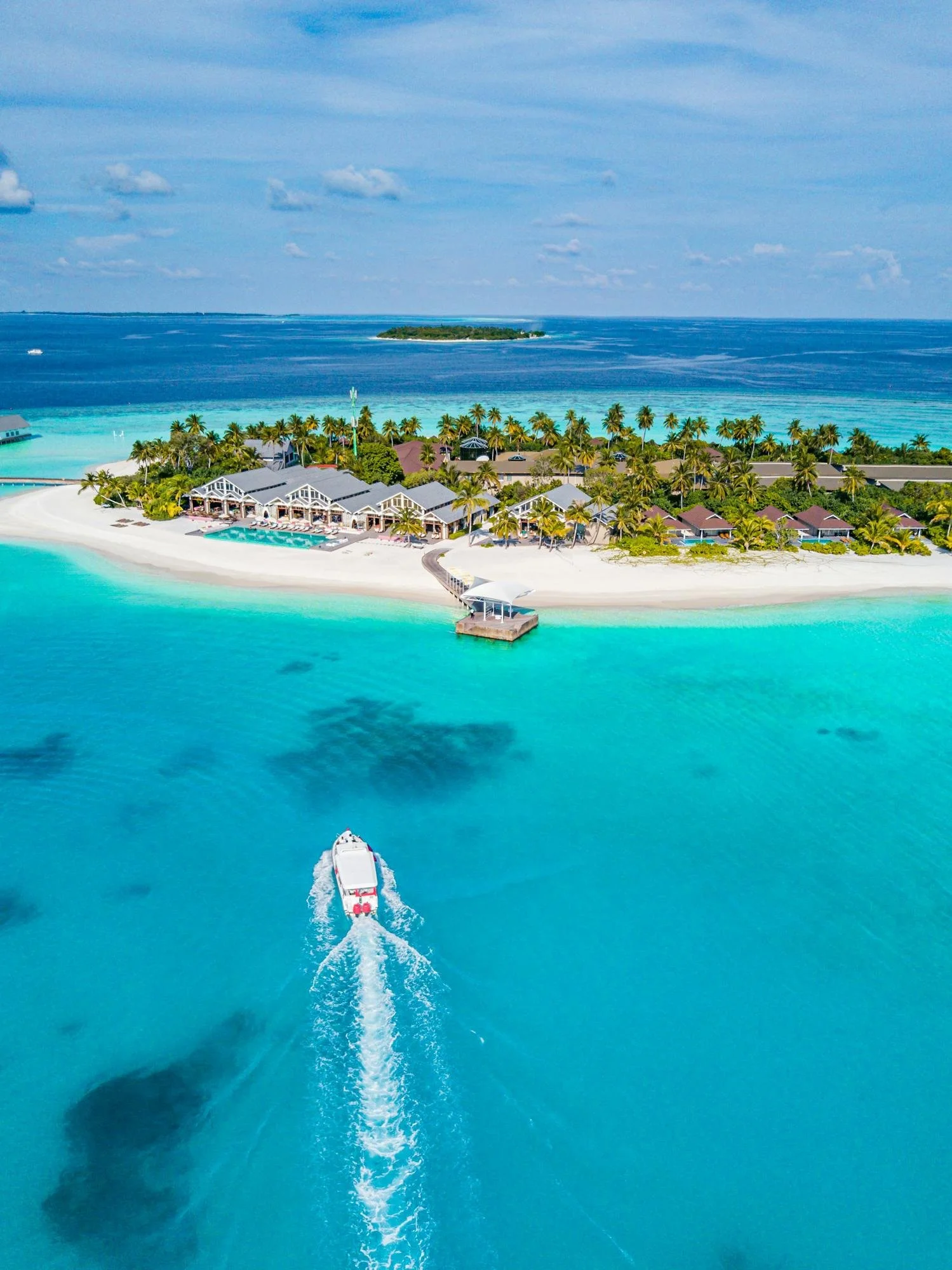
Are there resorts in Huvadhu Atoll? A small number, far fewer than the central atolls, which is central to the atoll's appeal. Most visitors choose between a resort stay, a local island guesthouse, or a seasonal liveaboard.
Huvadhu Atoll map: every dive site, surf break, resort and local island in one place.